From “Work Besties” to “Work Mums”: Why Generational Age Gaps Can Be a Workplace Superpower
Social media has a habit of finding a new way to describe something that has probably been happening for years.
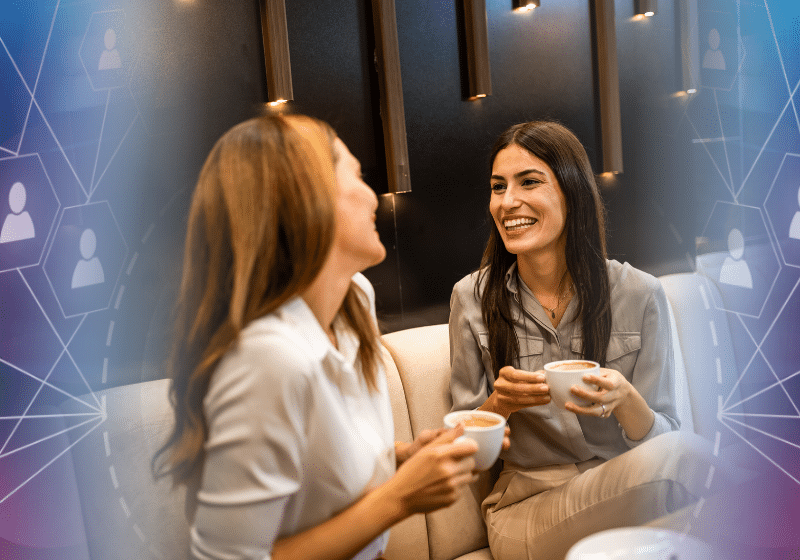
One of the latest workplace trends celebrates the friendships that develop between colleagues with significant age gaps. Videos and posts refer affectionately to a “work bestie”, a “work mum” or “work mom”, or joke about spending eight hours a day with “someone’s mum” or “someone’s dad”.
Behind the humour is something genuinely positive: people celebrating colleagues they may never have met outside work and friendships that cross generational boundaries.
I was recently invited to discuss this topic on BBC Radio, following the growing social media trend celebrating intergenerational workplace friendships. It was a light-hearted conversation, but it raised some important questions.
Why are we seeing wider generational age gaps in the workplace? What can colleagues of different ages learn from each other? And are we sometimes too quick to focus on the differences between generations rather than the benefits of bringing them together?
At the BBC, there is a real mix of ages working alongside one another. We see exactly the same at HR:4UK. Our team includes people at different ages, different stages of their careers and with very different experiences of life and work. For me, that is not a problem to be managed. It is a strength to be valued.
Why are there bigger generational age gaps in the workplace?
The modern workplace is changing.
People are working for longer, retirement patterns have changed, and many people are choosing to change careers or remain economically active later in life. At the same time, younger generations are entering employment with very different experiences of education, technology, communication and the world of work. The result is that many workplaces now have several generations working alongside one another.
A colleague at the beginning of their career might be working with someone who has 20, 30 or even 40 years of workplace experience. They may have grown up with completely different technology, cultural references and expectations about work. On paper, they might appear to have very little in common.
In reality, they may become the best of friends.
That is exactly what the social media trend is celebrating. Videos about age-gap workplace friendships have featured captions such as “me and someone’s dad eight hours a day” and “me and someone’s mum at our 9-to-5”, alongside references to a much older or younger “work bestie”. The humour comes from the contrast. The value comes from the relationship.
What are the benefits of a multi-generational workforce?
A multi-generational workforce can bring together a much broader range of experiences, ideas, skills and perspectives.
Someone with decades of experience may have developed judgement, resilience and an instinct for dealing with situations that cannot easily be taught in a training course. They may have seen economic downturns, technological change, difficult customers, organisational restructures and countless workplace challenges.
A younger or less experienced colleague may approach the same problem completely differently. They may bring new ideas, challenge established practices and ask the question that every organisation occasionally needs to hear:
“Why do we do it that way?” Sometimes the answer is that there is a very good reason.
Sometimes the answer is simply: “Because we always have.”
The strongest workplaces need both perspectives. Experience is valuable, but so is curiosity. Organisational knowledge matters, but so does innovation. Confidence built over a long career can be enormously valuable, but so can the fresh perspective of someone who has not yet been conditioned to accept that something “cannot be done”.
Age diversity can therefore contribute to better problem-solving, more balanced decision-making and a workplace that better reflects the customers and communities an organisation serves.
What can different generations learn from each other at work?
One of the biggest benefits of an age-diverse workforce is the opportunity for learning to happen in every direction.
Traditionally, workplace mentoring has often been viewed as a more experienced employee passing knowledge down to a younger colleague. That remains incredibly valuable, but it is only half of the story. Learning does not have to follow an organisational chart or a date of birth.
A younger colleague may help someone embrace new technology, understand an emerging social media platform or see a familiar process from a completely different perspective.
A more experienced colleague may share knowledge about managing difficult conversations, navigating workplace relationships, dealing with setbacks or understanding the history behind a business decision.
This is sometimes described as “reverse mentoring”, but perhaps we do not always need a formal label for it. Sometimes it is simply colleagues learning from each other.
The key is recognising that experience and expertise are not the same thing as age. A person can be highly experienced in one area and a complete beginner in another.
The best workplace relationships allow people to say:
“Can you show me how to do that?” without embarrassment, regardless of who is older, more senior or has been with the organisation longer.
Are generational differences at work real?
Yes, sometimes they are, but we need to be careful. Different generations may have had different experiences of the world and the workplace. Technology is perhaps the most obvious example.
Some employees began their careers before email was widely used in the workplace. Others have never known a world without smartphones, instant messaging and social media. That can lead to some very different communication preferences.
One person sends an email.
Another sends a Teams message.
Someone else picks up the phone.
And someone replies with a thumbs-up emoji, leaving the recipient wondering whether they are being friendly, efficient or unexpectedly passive-aggressive. These differences can be funny, but they can also cause genuine misunderstandings if we are not careful.
The danger comes when we turn observations into stereotypes.
“Gen Z do not want to work.”
“Older workers do not understand technology.”
“Millennials are entitled.”
“Baby Boomers cannot cope with change.”
None of these statements tells us anything meaningful about an individual employee.
Generational labels may be useful when discussing broad social trends, but they should never become a substitute for getting to know the person in front of us.
Two people born in the same year can have completely different attitudes towards work. Equally, two colleagues separated by 30 years may discover that they have remarkably similar values, interests and senses of humour.
Why are intergenerational workplace friendships important?
One of the things I particularly like about the current social media trend is that it celebrates something we can easily overlook. Work brings people together. You may work alongside someone you would never naturally have met in your personal life. You may be different ages, have different backgrounds, be at completely different stages of life and have entirely different interests.
Yet you spend a significant amount of time together.
You solve problems together. You support each other through difficult days. You celebrate successes. You share stories. You laugh at things that nobody outside your workplace would ever understand. And, sometimes, you become genuine friends.
That is why terms such as “work bestie” and “work mum” resonate with so many people. They are affectionate ways of describing relationships that have become important.
Of course, we should be careful not to assume that an older female colleague wants to be everybody’s “work mum”, or that age automatically determines the role someone plays in a team. Not everyone will like those labels.
But where the language is used affectionately and mutually, the sentiment behind it is positive: this is someone at work who supports me, understands me and makes my working day better.
Can age diversity improve workplace culture?
Absolutely, but simply employing people of different ages is not enough.
A business can have a multi-generational workforce while still allowing people to operate in separate groups or “generational silos”. The real benefit comes when people are encouraged to work together, exchange ideas and understand one another.
Employers and managers have an important role to play in creating that environment. They should be alert to assumptions about what someone will or will not want because of their age. A younger employee should not automatically be expected to be the team’s technology expert. An older employee should not be overlooked for training or career development because someone assumes they are approaching retirement.
Likewise, managers should avoid making assumptions about flexibility, ambition, communication preferences or willingness to change. The best approach is often the simplest one:
Ask the individual.
What motivates them? How do they prefer to communicate? What do they want to learn? What experience can they share? What support do they need? What do they want from the next stage of their career? Good people management is rarely about managing a generation.
It is about managing people.
How can employers make the most of a multi-generational workforce?
Employers should create opportunities for people with different levels of experience to work together rather than assuming knowledge will transfer naturally. That might include mentoring, reverse mentoring, project teams made up of colleagues from different parts of the organisation, collaborative problem-solving or simply creating a culture where asking for help is encouraged.
Managers should also challenge generational stereotypes when they hear them.
Comments about “young people today” or assumptions that an older colleague “will not understand” may sometimes be intended as harmless, but repeated stereotypes can influence decisions about recruitment, training, promotion and opportunity.
Age is also a protected characteristic under the Equality Act 2010, which means employers must be mindful of age discrimination in the workplace. Beyond the legal position, however, there is a much simpler business case.
If you recruit and manage people based on assumptions about their generation, you risk missing the individual talent sitting in front of you.
What can employees do to bridge generational gaps at work?
Be curious.
Ask questions.
Do not assume that someone will not understand you because they are older or younger. Do not dismiss experience as being “old-fashioned”, and do not dismiss a new idea simply because it comes from someone who has not been in the workplace for very long. Most importantly, recognise that different does not mean wrong.
Your colleague may communicate differently from you. They may approach a problem differently. They may have different cultural references, different priorities outside work and a completely different career history.
That difference may be exactly what makes the relationship valuable.
What do all generations really want from work?
For all the discussion about Baby Boomers, Generation X, Millennials and Generation Z, I think we sometimes forget how much people have in common. Most employees, whatever their age, want to be treated with respect.
They want to feel valued.
They want to know that their contribution matters.
They want to be listened to.
They want opportunities to learn and develop.
And they want to work with people who make the working day a little better.
The language may change. One generation might call someone a trusted colleague. Another might call them their “work bestie”. But perhaps the relationship itself has not changed quite as much as we think.
The real value of generational diversity at work
My conversation with BBC Radio started with a fun social media trend, but it highlighted something much bigger. A great workplace is not about having the “right” generation. It is about bringing different people together and recognising what each individual contributes.
Someone may bring 30 years of experience and instinct. Someone else may look at the same problem with completely fresh eyes because they have not spent 30 years being told, “That’s how we have always done it.”
We need both.
The best multi-generational workplaces are not those where everyone thinks, communicates or works in exactly the same way. They are the workplaces where people are willing to learn from one another, challenge assumptions and appreciate the value of a different perspective.
So perhaps the current social media trend is worth celebrating.
Because behind the jokes about “work mums”, “someone’s dad” and age-gap “work besties” is a reminder that work can create connections between people who might otherwise never have met. And sometimes, the colleague you appear to have the least in common with turns out to be the person who teaches you the most.
At HR:4UK, we support employers in creating positive, inclusive and legally compliant workplaces where people can perform at their best. If you need support with managing a multi-generational workforce, workplace culture, equality and diversity, or any other HR challenge, our team is here to help.
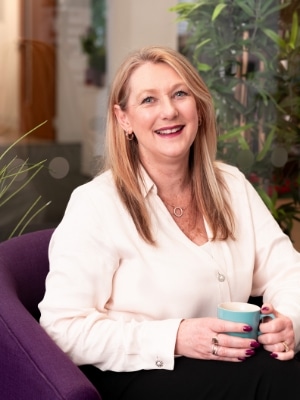
Angela Clay
A qualified employment law solicitor and our managing director, Angela has unparalleled legal expertise and decades of experience and knowledge to draw from. She’s a passionate speaker and writer that loves to keep employers updated with upcoming changes to legislation, and is a regular guest speaker on BBC Leicester Radio.