What climbing Kilimanjaro taught me.
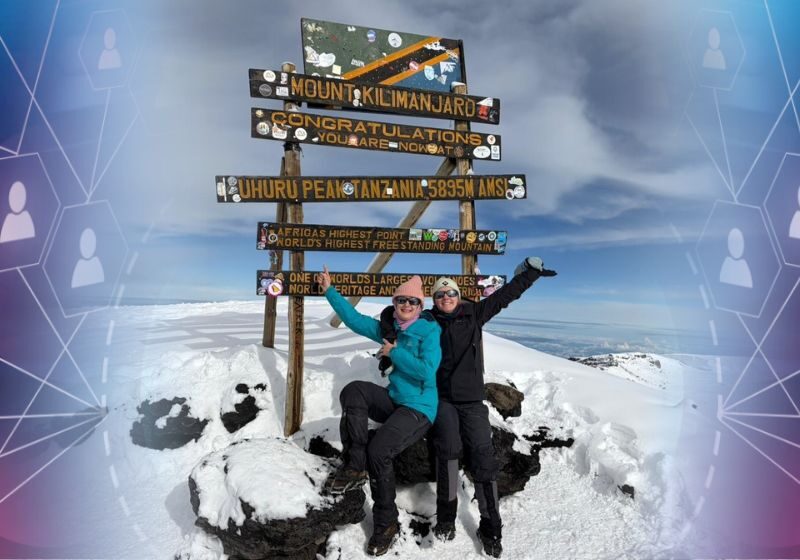
At the end of March, I did something that had been in the planning for quite some time, I climbed Mount Kilimanjaro.
It wasn’t something that was on my ‘bucket list’! I have my daughter to thank for the challenge. It’s one of those things that sounds exciting when you first say it out loud — and believe me, it is — but it’s also demanding, unpredictable, and at times far tougher than you expect. What I hadn’t fully appreciated was just how varied the journey itself would be. The climb takes you through five very different terrains, starting in the rainforest, moving through moorland and alpine desert, and eventually onto the arctic conditions near the summit. Each stage brings its own challenges, but also its own kind of beauty. The changing landscape is stunning, and it’s a constant reminder that progress doesn’t always look or feel the same along the way. Standing at the summit is an incredible moment, but it’s not really about that single point in time — it’s everything that comes before it that makes it possible.
What struck me most about the experience wasn’t just the physical challenge, but how closely it mirrors the realities of running a business, leading people, and preparing for change.
Preparation is everything
The climb itself is only a small part of the story. The real work happens long before you set foot on the mountain. My preparation in earnest started back in October.
Months of training, building stamina, getting used to discomfort, and preparing mentally for what lies ahead all play a part. You don’t just decide to climb Kilimanjaro and hope for the best. If you do, you’re likely to struggle (and truth be told, we saw a team just turn up with little preparation, and it won’t surprise you that they didn’t summit).
It’s no different in business. The organisations that manage change successfully, whether that’s growth, restructuring, or adapting to employment law changes, are rarely the ones reacting in the moment. They are the ones who have taken time to prepare, to understand what’s coming, and to put the right foundations in place.
Preparation creates confidence. Without it, even straightforward people management issues can quickly become complex.
You can’t rush the journey
One of the most important lessons on the mountain is pacing. There’s a phrase the guides use constantly: “pole pole” — slowly, slowly. There were also a mantra we heard constantly along the way — “hakuna matata, matata hakuna”, “one dream, one team”, “to the top, non-stop.”
At the time, they felt like simple words of encouragement, but over the course of the climb they came to represent something much bigger: a shared mindset, collective responsibility, and a focus on keeping moving forward together, no matter how challenging the journey became.
You want to make progress, to move faster, to get there. But the reality is that going too quickly is often what causes people to fail. The altitude, the terrain, and the conditions demand a steady, consistent approach.
In business, we often see the opposite. Pressure to act quickly, to resolve issues, or to make decisions without fully stepping back. But when it comes to managing employees and handling workplace issues, rushing decisions can increase risk rather than reduce it.
Taking time to follow a fair process, to have the right conversations, and to think through the implications isn’t a delay, it’s what leads to better, more sustainable outcomes.
The conditions aren’t always predictable
No matter how much you prepare, you can’t control everything. The weather changes, the terrain shifts, and some days are simply harder than others.
There were moments on the climb where things didn’t go to plan. We got wet and I mean soaked to the bone – this wasn’t in the plan. Yes, we expected rain as it is the start of their wet season and had prepared for this, but we didn’t (or certainly I didn’t) expect to get drenched. Times when it felt more difficult than expected, or when progress felt slow. That’s part of the experience.
The same is true in business. Even with the best preparation, employee relations issues can be complex, sensitive, and sometimes unexpected. Situations evolve, people respond differently, and external factors come into play.
What matters is not avoiding difficulty altogether, but being equipped to deal with it when it comes.
You don’t get there alone
Although climbing Kilimanjaro is often described as a personal challenge, the reality is very different. You don’t get there on your own.
Behind every step is a team of people making it possible. The guides set the pace and keep you moving forward, but it’s the porters , the unsung heroes, who carry the equipment, prepare the camp, and quietly ensure everything is in place each day. Without that collective effort, reaching the summit simply wouldn’t happen.
That sense of teamwork becomes even more apparent as you approach the final ascent.
The climb to the summit is hard, far harder than I had fully appreciated. At that stage, your focus narrows. It becomes less about the bigger picture and more about putting one foot in front of the other and just keeping going. Every step takes effort.
What I hadn’t expected was the experience of passing trekkers who were already on their way down. They were full of energy, celebrating their achievement, encouraging those of us still making our way up. In the moment, I have to admit, I didn’t fully appreciate it. My focus was entirely on the next step, the next breath, the next small bit of progress.
But their encouragement mattered more than I realised at the time. It helped keep momentum going, even when it felt difficult.
On the way back down, the perspective shifts. The same path, but a completely different experience. It was then that I found myself doing exactly what they had done, offering encouragement, cheering others on, and recognising just how important those moments of support can be when someone is facing their toughest stretch.
Looking at the faces of those still climbing, I could see exactly how they were feeling, because I had been there only hours before.
There’s a strong parallel in business. Success is rarely achieved in isolation. It relies on the collective effort of people who may not always be visible, on support given at the right time, and on leaders and colleagues who lift others when they need it most. And often, the people who offer the greatest encouragement are those who have already walked the path themselves.
It’s about reaching the summit safely
Of course, reaching the summit is the goal. But it’s not about getting there at any cost. It’s about getting there safely, in a way that allows you to come back down again.
That balance is important. Success isn’t just about achieving the outcome, but how you get there.
In the workplace, this is often where risk arises. Decisions may achieve the desired result in the short term, but if the process hasn’t been handled properly, the consequences can follow later. A dismissal, a restructure, or a contractual change might seem resolved, but without a fair and considered approach, the risk remains.
A different perspective
Standing at the top of Kilimanjaro gives you a different perspective. Not just because of the height, but because of everything it took to get there.
It’s a reminder that progress isn’t always quick, that preparation matters more than we sometimes realise, and that support, patience and consistency all play a role in achieving something meaningful.
Those same principles apply in business every day. Particularly at a time when expectations around people management and employment law continue to evolve, taking a considered, well-supported approach has never been more important.
For me, it was an incredible experience! Challenging, rewarding, and one I’ll never forget. And like many things, it reinforced that the fundamentals still matter. Plan well, pace yourself, support those around you, and don’t be afraid to ask for help along the way.
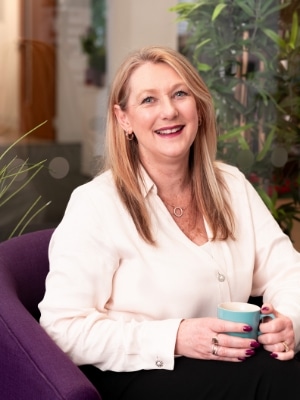
Angela Clay
A qualified employment law solicitor and our managing director, Angela has unparalleled legal expertise and decades of experience and knowledge to draw from. She’s a passionate speaker and writer that loves to keep employers updated with upcoming changes to legislation, and is a regular guest speaker on BBC Leicester Radio.